Tomohiro Okamoto
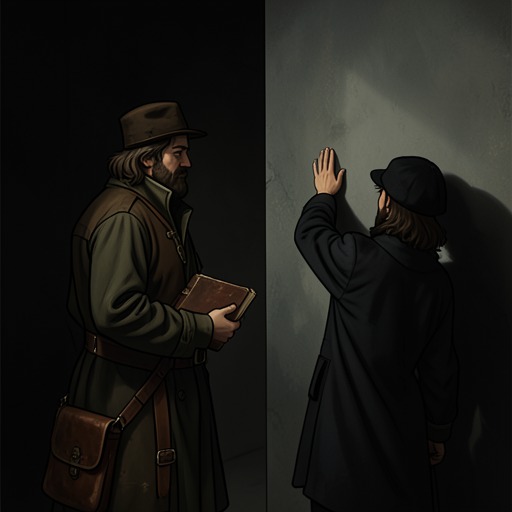
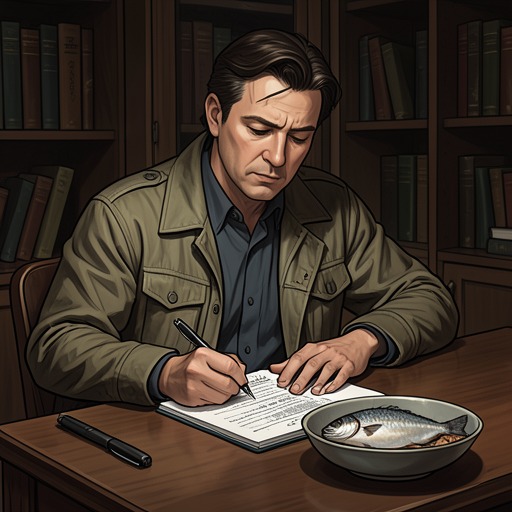
Life of PiTomohiro Okamoto is the retired maritime official whose investigation turns the aftermath of the Tsimtsum’s disappearance into a test of evidence and storytelling. Sent with his junior colleague Atsuro Chiba to question Pi Patel in Mexico, he seeks an explanation for the shipwreck but cannot verify the survivor’s account. His skepticism is consequential without being conclusive: after hearing two versions of Pi’s ordeal, Okamoto is asked which he prefers, and he answers that he prefers the story with animals.
Identity and Assignment
At the time of the interview, Okamoto is a member of the Maritime Department in the Japanese Ministry of Transport; the account later identifies him as retired. He and Chiba are dispatched to contact the lone survivor of the Japanese ship Tsimtsum, which had vanished in Pacific international waters, and to see whether the survivor can shed light on the vessel’s fate. The assignment is practical and investigative: establish what can be learned about a ship lost without explanation.
Okamoto does not travel alone. Chiba is his junior colleague, and Okamoto explicitly treats the trip as a chance to instruct him in the work. Before the interview begins, he tells Chiba to pay attention and learn. The exchange presents Okamoto as an experienced official accustomed to directing an investigation, even as the journey that precedes it tests their patience and stamina.
The Journey to Tomatlán
The route begins in Long Beach, California, where the two officials are on unrelated business when word reaches them that a survivor has landed near Tomatlán. Okamoto buys a map of Mexico, but a fold crosses Baja California over the small coastal town of Tomatan. He reads the name as Tomatlán and concludes that driving will be the quickest way to reach it. The mistaken reading sends them on a long detour before they discover the error.
Rather than turn back, Okamoto decides they should continue to Santa Rosalia, travel by ferry across the Gulf of California to Guaymas, and proceed from there. The ferry is late and slow; the roads are poor. Their car gets a flat tire and later breaks down after a mechanic secretly replaces parts of its motor with used components. On the return journey the car breaks down again, and another mechanic overcharges them. These delays give the official mission a distinctly physical cost: when the pair finally arrive at the Benito Juárez Infirmary in Tomatlán, they have been travelling continuously for forty-one hours.
Interview and Skepticism
At the infirmary, Okamoto introduces himself and Chiba, identifies the purpose of their visit, and asks Pi Patel whether he can speak with them. The interview lasts close to three hours and is recorded. Its preserved form is a transcript, with the speakers identified where necessary and translated Japanese passages marked as such. The procedural record matters: Pi’s account is not presented only as an uninterrupted tale, but also as testimony questioned by officials seeking a usable explanation for a maritime disaster.
Okamoto states the central difficulty plainly: he and Chiba do not believe Pi’s story. When Pi asks why, Okamoto objects that it does not hold up and points to the claim that an orangutan came floating on an island of bananas. His challenge is concrete rather than abstract: bananas do not float, he says, and they are too heavy. The exchange makes his skepticism visible through a small, testable detail, bringing the extraordinary animal account into contact with ordinary expectations about physical evidence.
Two Accounts and a Preference
The interview reaches beyond the question of whether individual details can be verified. Pi asks Okamoto to compare the story with animals with the story without animals, after establishing that both accounts share the sinking of the ship, the death of his family, and his suffering. He emphasizes that the officials cannot prove which account is true and that, as far as factual consequences go, the choice makes no difference. The question therefore shifts the conversation from investigation toward interpretation: what kind of account will the listeners accept when certainty is unavailable?
Chiba answers first that he prefers the story with animals. Okamoto calls the question interesting, and his own preference is established by the final report, which records that the officials prefer that version. The response does not resolve the factual dispute or prove Pi’s animal narrative. Instead, it leaves the distinction between proof and preference exposed. Okamoto’s role is not to certify the story as fact, but to register what the story’s listeners choose when the evidence cannot settle the matter.
Findings and Narrative Role
Okamoto’s report says that the sole survivor could shed no light on the reason for the sinking. The ship appears to have gone down quickly, suggesting a major hull breach, and the quantity of debris supports that possibility; nevertheless, the precise cause cannot be determined. No major weather disturbance was reported in the area that day, so the report treats Pi’s impression of the weather as unreliable and allows that weather may at most have contributed. A cause internal to the ship remains possible.
The report also handles Pi’s memory of hearing an explosion cautiously. It notes that the sound could suggest a serious engine problem, perhaps a boiler explosion, but labels this speculation. The Tsimtsum was twenty-nine years old, built in Malmö in 1948 and refitted in 1970; stress from weather combined with structural fatigue is offered only as another conjecture. A collision with another ship is considered unlikely because no other mishap was reported in the area, while collision with debris remains possible. The official document accumulates plausible explanations without turning any of them into a finding.
Okamoto’s recollection of the meeting preserves a human impression alongside the technical uncertainty: he describes the interrogation as difficult and memorable and remembers Pi as very thin, very tough, and very bright. Together, the transcript, report, and retrospective judgment define Okamoto’s narrative function. He gives the investigation an institutional voice, tests the account against concrete objections, and records the limits of what the inquiry can establish. The ship’s cause remains unresolved; the preference for one story does not erase that uncertainty, but makes the unresolved choice part of the interview’s outcome.